- English
- French
- German
- Portuguese
- Spanish
- Russian
- Japanese
- Korean
- Arabic
- Greek
- German
- Turkish
- Italian
- Danish
- Romanian
- Indonesian
- Czech
- Afrikaans
- Swedish
- Polish
- Basque
- Catalan
- Esperanto
- Hindi
- Lao
- Albanian
- Amharic
- Armenian
- Azerbaijani
- Belarusian
- Bengali
- Bosnian
- Bulgarian
- Cebuano
- Chichewa
- Corsican
- Croatian
- Dutch
- Estonian
- Filipino
- Finnish
- Frisian
- Galician
- Georgian
- Gujarati
- Haitian
- Hausa
- Hawaiian
- Hebrew
- Hmong
- Hungarian
- Icelandic
- Igbo
- Javanese
- Kannada
- Kazakh
- Khmer
- Kurdish
- Kyrgyz
- Latin
- Latvian
- Lithuanian
- Luxembou..
- Macedonian
- Malagasy
- Malay
- Malayalam
- Maltese
- Maori
- Marathi
- Mongolian
- Burmese
- Nepali
- Norwegian
- Pashto
- Persian
- Punjabi
- Serbian
- Sesotho
- Sinhala
- Slovak
- Slovenian
- Somali
- Samoan
- Scots Gaelic
- Shona
- Sindhi
- Sundanese
- Swahili
- Tajik
- Tamil
- Telugu
- Thai
- Ukrainian
- Urdu
- Uzbek
- Vietnamese
- Welsh
- Xhosa
- Yiddish
- Yoruba
- Zulu
TA1 Titanium Sheet
Brand: FRL metal
Density: 4.51g/cm³
Grade: Gr1 TA1
Standard: ASTM B265,ASTM B551,ASTM B352
Thickness: 0.5mm 1mm 2mm 3mm 4mm Or As Per Customer's Request
Processing technology: cold rolling/hot rolling
Advantages: high strength and corrosion resistance
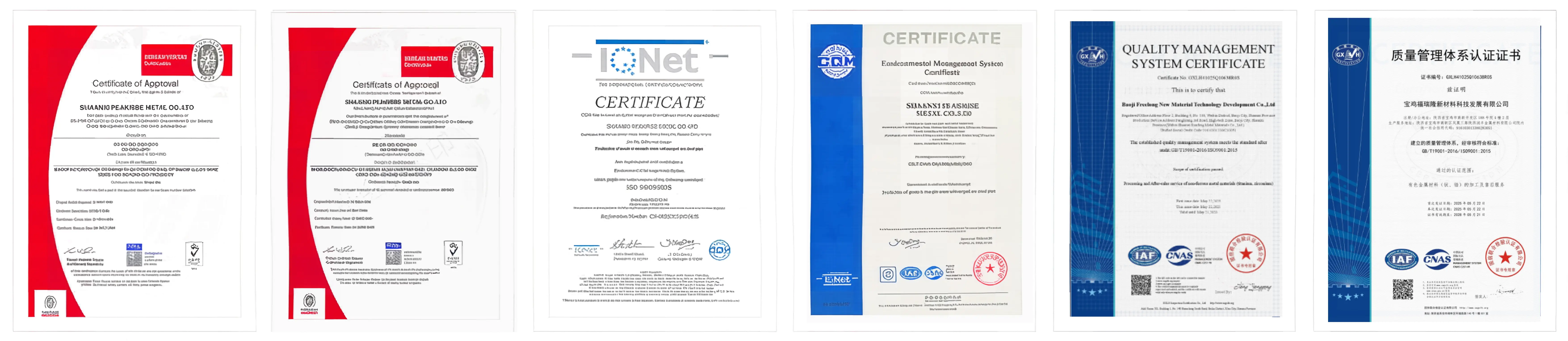
Certification: ISO9001
Delivery time: 7-15 days
Packaging Details: Plywood case
The scope of use of TA1 Titanium sheet includes but is not limited to:
1. Aerospace: structural parts and engine parts of aircraft, rockets and satellites.
2. Chemical industry: chemical equipment, heat exchangers, pipelines.
3. Medical devices: artificial joints, bone plates, dental implants.
4. Marine engineering: ships, offshore platforms, diving equipment.
5. Sporting goods: bicycle frames, golf clubs, tennis rackets.
TA1 Titanium sheet display picture
 |
 |
 |
WhatsApp&Wechat: +86 13571190943
E-mail: Jenny@bjfreelong.com

| Chemical composition reference standard | |||||||||
| Grade | Al | V | N≤ | C≤ | H≤ | Fe≤ | O≤ | Other elements (single) | |
| TA1 (GR1) | 0.03 | 0.08 | 0.015 | 0.2 | 0.18 | 0.1 | 0.4 | ||
| TA2 (GR2) | 0.03 | 0.08 | 0.015 | 0.3 | 0.25 | 0.1 | 0.4 | ||
| TC4 (GR5) | 5.5-6.75 | 3.5-4.5 | 0.05 | 0.08 | 0.015 | 0.3 | 0.2 | 0.1 | 0.4 |
The properties of TA1 titanium plate can be summarized as "three highs and three lows": high corrosion resistance, high plasticity, and high biocompatibility; low strength, low density, and low elastic modulus.
| Feature | TA1 | TA2 |
|---|---|---|
| Impurity Content | Lower, higher purity | Slightly higher, the most common commercial grade |
| Plasticity / Formability | Best, ideal for deep drawing and complex thin-walled parts | Good, meets standard forming requirements |
| Strength | Lower | Higher, with a better overall balanced performance |
| Cost-Effectiveness | Relatively higher cost | Higher cost-effectiveness |
| Typical Applications | Complex stamped parts, heat exchanger plates, non-load-bearing medical devices | Vessel shells, flanges, standard anti-corrosion pipes, general-purpose plates |
Typical Applications: Complex stamped parts, heat exchanger plates, non-load-bearing medical devices; vessel shells, flanges, standard anti-corrosion piping, and plate materials.
Selection Recommendations:
Choose TA1 when significant cold deformation, deep drawing, or the fabrication of complex thin-walled components is required.
Choose TA2 for greater cost-effectiveness when dealing with standard piping, atmospheric-pressure storage tanks, or components with less demanding forming requirements.
If the equipment must withstand both heavy loads and corrosion, commercially pure titanium is no longer suitable; an upgrade to a titanium alloy such as TC4 is recommended.
Mechanical and Physical Properties of TA1 Plate
1. Low density: The density is approximately 4.51 g/cm³, which is only about 57% that of steel, offering significant advantages for lightweight applications.
2. Low strength: The tensile strength in the annealed state typically ranges from 240 to 370 MPa—far lower than that of titanium alloys like TC4—making it unsuitable for load-bearing structural components subject to high pressure or heavy loads.
3. Good low-temperature performance: It retains good toughness in cryogenic environments (down to -196°C) without undergoing a ductile-to-brittle transition, making it suitable for cryogenic fluid equipment.
4. Limited heat resistance: Long-term service temperatures should not exceed 350°C; prolonged exposure to high temperatures leads to accelerated surface oxidation, grain coarsening, and a decline in mechanical properties.
Our Packaging


About us
Baoji Freelong New Material Technology Development Co., Ltd loated in Baoji City--China's Titanium Valley,we are mainly doing Zirconium,Titanium,Nickel,Niobium,Tantalum etc metal material and other alloy's produce,OEM and Sales.and also exporting the goods what we make. we have a lot of trustful clients and partner.and also we were authority by some firms.At present,we were build our relationship with Australia,Korea,German,US,UK,Malaysia,AZ,Middle East,Taiwan,Etc. Our company always take the quality and service as our responsibility,We always get close even match the quality what our customer wanted and as for quality,we never say no and no reason for quality failure.
Our Factory
 |
 |
 |
 |
 |
Production Equipment


Testing Equipment


WhatsApp&Wechat: 86 13571190943
E-mail: jenny@bjfreelong.com
Address: No.188. Gaoxin Ave, Baoji City, Shannxi, China.

_1745897084784.webp)

_1745389379051.webp)
_1745739239434.webp)
Learn about our latest products and discounts through SMS or email